
Bench Warrants in Lancaster County
“Bench warrant” is useful plain speech for a judge's arrest process tied to a missed appearance or order. Virginia court records may instead use capias, show cause, or failure to appear. In Lancaster County, the correct clerk depends on the underlying case: GDC for adult traffic and misdemeanor matters, Circuit for felony process after indictment, and JDR for juvenile or family matters.
A missed date, violation of release terms, a surety surrender, or circuit indictment can lead to process. Traffic rules have exceptions, and a simple missed traffic infraction appearance should not automatically be described as a warrant. Ask the court what was entered.
Lancaster County's FTA Trail Starts at the Court
Start with the Lancaster GDC search if the notice concerns traffic, a misdemeanor, or a local ordinance. Search by case number, name, or hearing date, then ask the clerk whether a capias or show-cause process was issued. A case history may show the hearing without a clear live warrant field. The court, not an online summary, determines whether a missed appearance changed the case.
The GDC's current schedule lists Wednesday arraignments, reviews, traffic matters, and bond hearings at 9:00 a.m. That docket explains why calling first matters; it is not an open recall window or same-day promise.
How a Lancaster County Bench Warrant Is Issued
The court handling the case records a missed appearance or other violation, then a judge may issue the process allowed for that matter. A capias commands an officer to arrest and bring a person before court. A show-cause order directs a person to answer why an order was not followed. The form and route depend on whether the case is in GDC, Circuit, or JDR.
Virginia's public OCIS system is not a full statewide warrant database. After issuance, the clerk's case record, officer's return, and any recall order may be held in different parts of the court file. The clerk can explain which event appears and what step comes next.
Lancaster County Dockets Differ by Court
General District Court's published Wednesday morning calendar groups traffic, arraignments or reviews, and bond hearings. Circuit Court terms begin on the fourth Friday of January, April, July, and October. JDR has separate family and juvenile calendars, and its online case details are restricted. Those differences make the court name on the original summons important.
The official GDC contact and schedule page is shown below. Read the clerk's schedule before arranging an appearance.
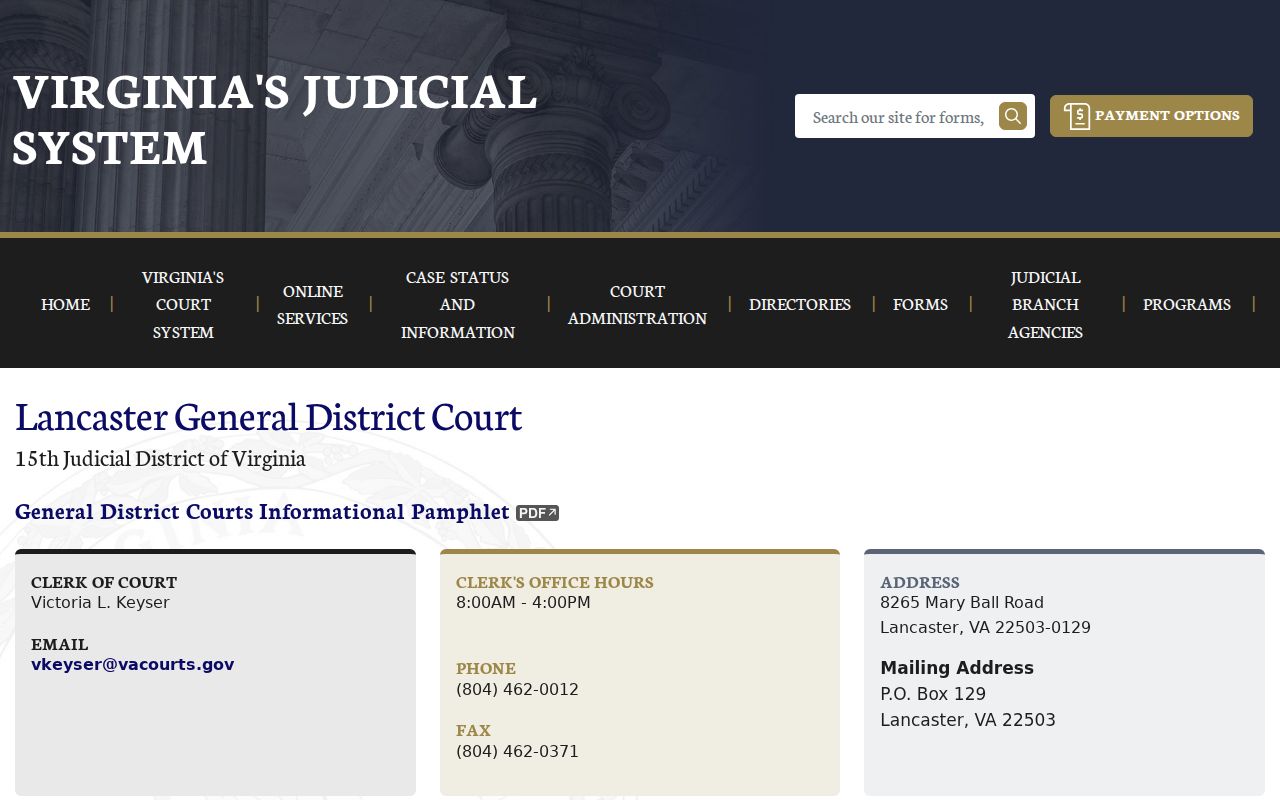
A docket listing tells when court is scheduled, not whether a particular process can be recalled without a judge.
The JDR court page lists a separate clerk and schedule; the image below shows its public contact route.
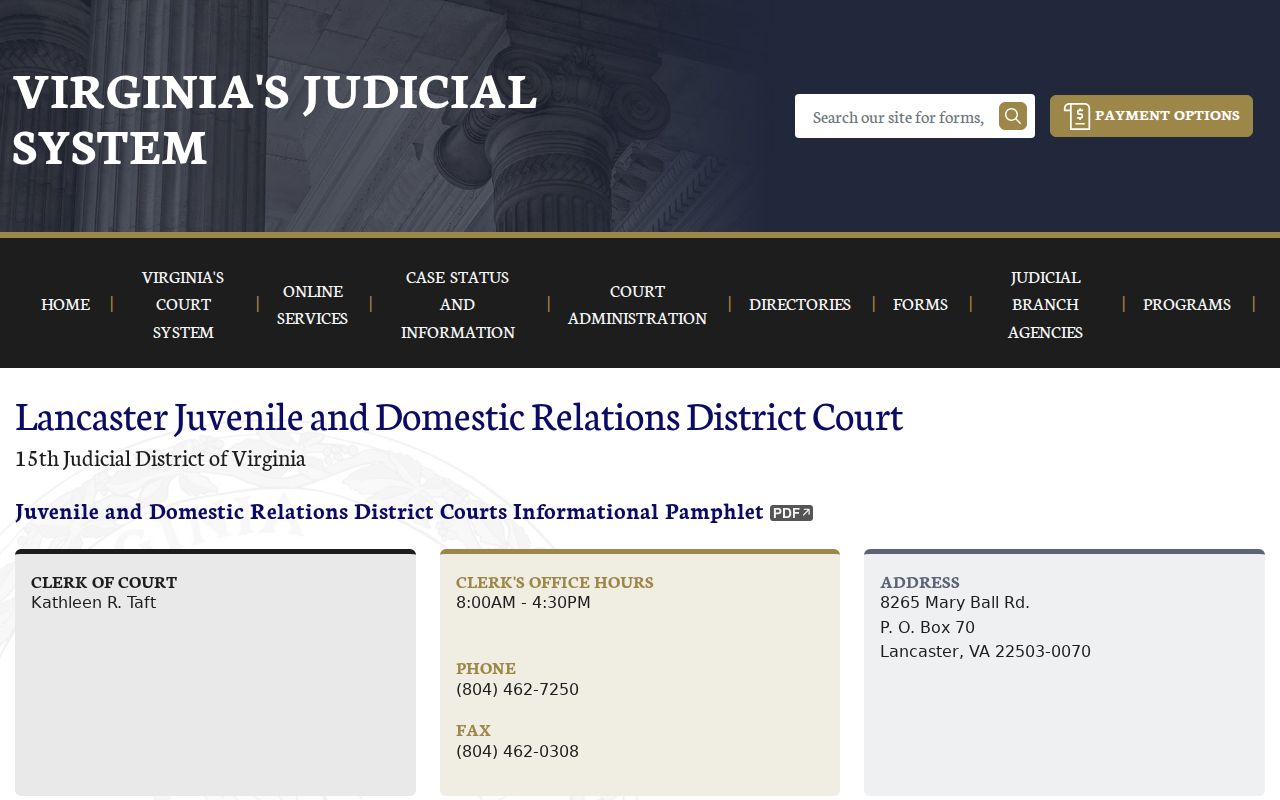
Juvenile case details remain restricted even though the clerk's contact information is public.
Bench Warrants and Arrest Warrants Compared
A bench or FTA matter begins with a court obligation already on the calendar. An arrest warrant begins with probable-cause review of a complaint. Both may authorize an arrest, but their trigger and court record differ. Lancaster County readers should identify the issuing court and ask how that court handles a motion or appearance. The companion Lancaster arrest-warrant page covers the probable-cause route.
| Feature | Bench Warrant | Arrest Warrant |
|---|---|---|
| Trigger | Missed appearance or court-order issue | Complaint and probable-cause finding |
| Issuer | Judge in the existing case | Magistrate or other authorized officer |
| Record path | Case docket, capias, or show cause | Warrant and underlying charge file |
| Next step | Ask that court about motion, date, or surrender | Confirm issuer, appearance, and bail route |
Lancaster County Capias Is Local Label
Virginia forms use capias for court process. A Circuit Court capias can follow an indictment or information and carries the issuing court's command, charge, and return details. District-court forms also use capias for certain criminal process. “Capias pro fine” is not a current Lancaster public label located in the official material. Ask the clerk whether the file says capias, show cause, failure to appear, or another term.
The Circuit Court form index lists capias and show-cause forms. The screenshot below shows the official form list, not a person's warrant.
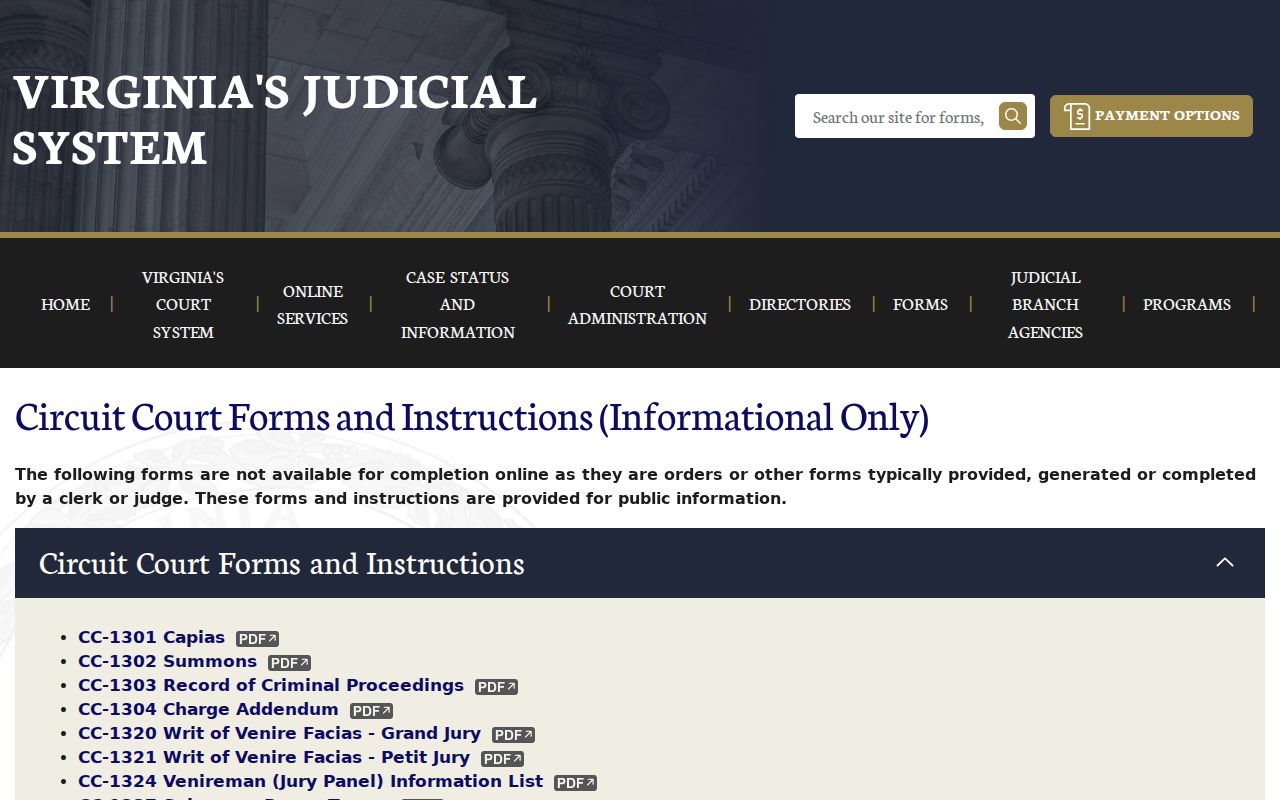
Form names help identify process; they do not establish a live status or a local filing fee.
How to Resolve a Lancaster County Bench Warrant
There is no published Lancaster walk-in recall desk, warrant motion form, or fee schedule. Call the issuing clerk and ask whether the judge requires a motion, a new appearance, a payment agreement, a surrender, or a bond hearing. An attorney can contact the court and help plan a controlled appearance. A clerk can give procedure, not legal advice or a promise that a judge will recall process.
- Find the case number and court from the summons, OCIS, or GDC search.
- Call that clerk to confirm current process, next date, and required filing.
- Ask counsel about a motion, arranged appearance, or surrender before traveling.
- After court action, confirm the clerk entered the return, recall, or new date.
Caution: Do not assume time has cleared a Lancaster process. Ask the issuing court whether it was recalled, quashed, served, or remains open.
Lancaster County Has No Walk-In Recall Window
Official pages do not give a public surrender schedule, bond window, accepted payment methods, or a warrant-recall motion for Lancaster. The District 15 magistrate office is listed at the sheriff's building with limited in-person coverage. Call before treating it as a counter. If the court directs surrender, ask the Sheriff's Office at (804) 462-5111 for current intake and custody instructions.
The magistrate system can issue warrants and hold bail hearings, but it is not the routine recall clerk. The official magistrate information page is pictured below.
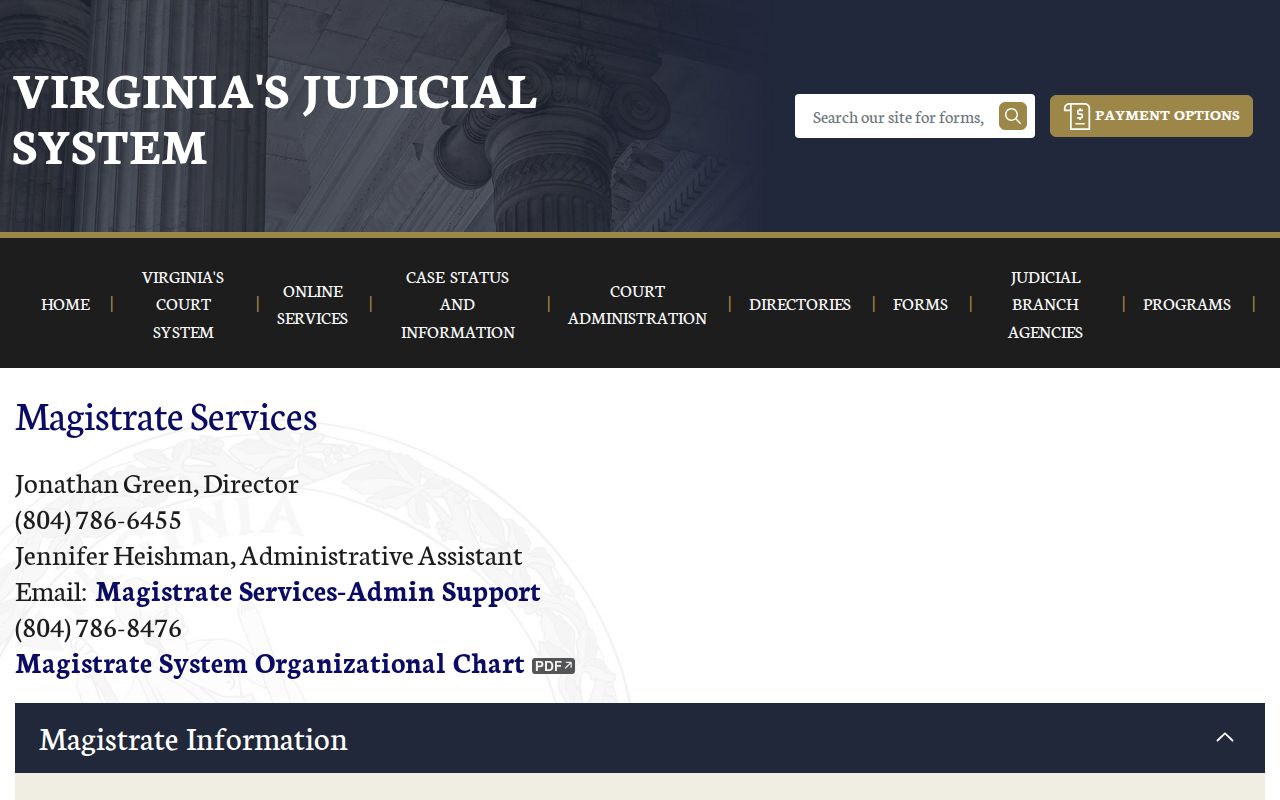
Ask the issuing clerk which office should handle the next step before appearing in person.
Which Lancaster County Court Issued It
A Lancaster County warrant follows the underlying case, not simply the town or mailing address. GDC handles adult traffic, misdemeanors, and local ordinances; Circuit handles felony cases after certification or indictment; JDR handles juvenile and family matters. Town charters contain police-justice authority, but the reviewed official sources did not establish a current separate municipal docket for Kilmarnock, Irvington, or White Stone.
Read the court and case number on the paper. If neither is clear, search the public case systems and call the matching clerk. The sheriff serves or routes custody questions; only the court controls its recall or next date.
The Circuit Court's official page gives its own contact and hours. The image below helps distinguish that route from district-court service.
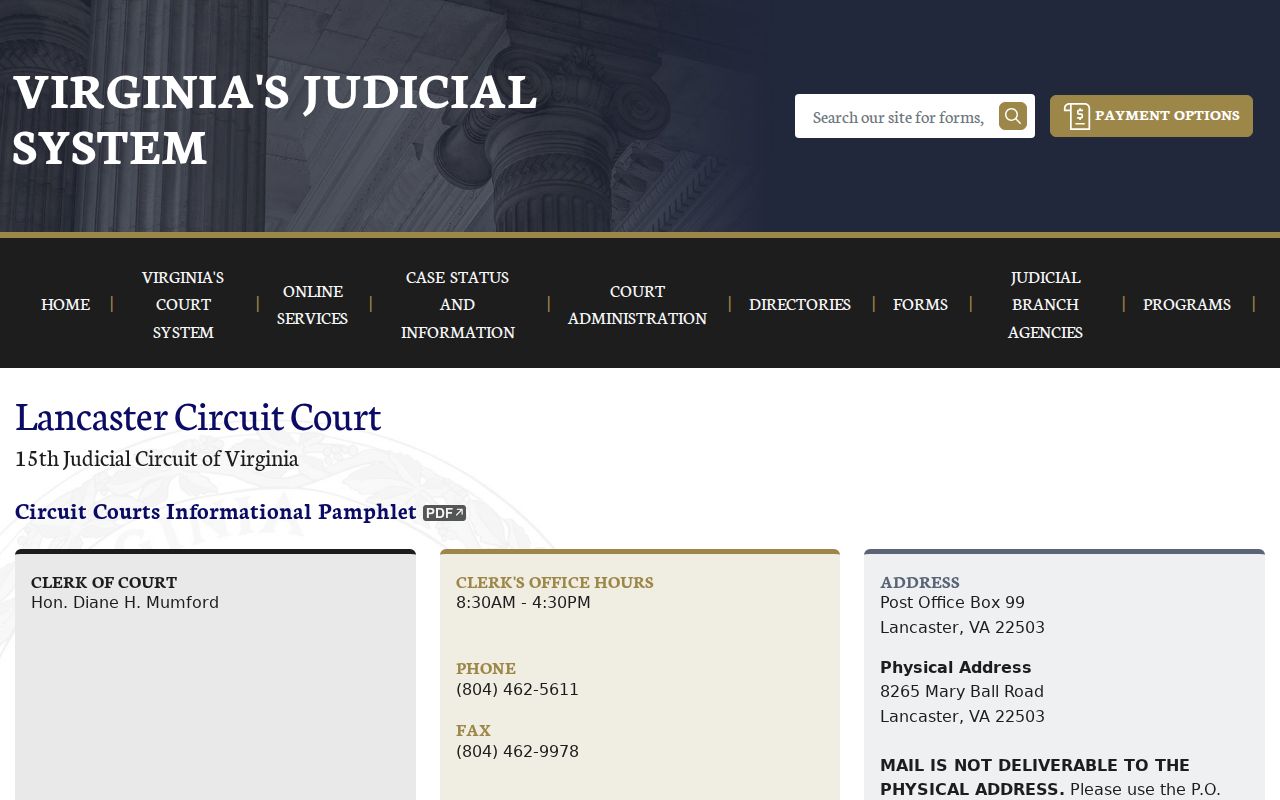
A felony capias or other Circuit process should be confirmed with that clerk.
Lancaster County's Missed-Date Next Steps
When a hearing was missed, write down why and gather any notice, travel issue, illness record, or other paper that explains the absence. Virginia's FTA law recognizes mitigating circumstances when willfulness is assessed, but it does not promise that a warrant will be withdrawn. The court decides whether a motion, appearance, payment agreement, or other order is needed.
Keep the clerk's instructions and the new court date. If bond was posted earlier, ask whether the court entered a forfeiture or changed release terms. Do not pay a caller or use an unofficial service to clear process. The official Virginia FTA statute sets the legal framework; Lancaster's judge applies it to the case.